
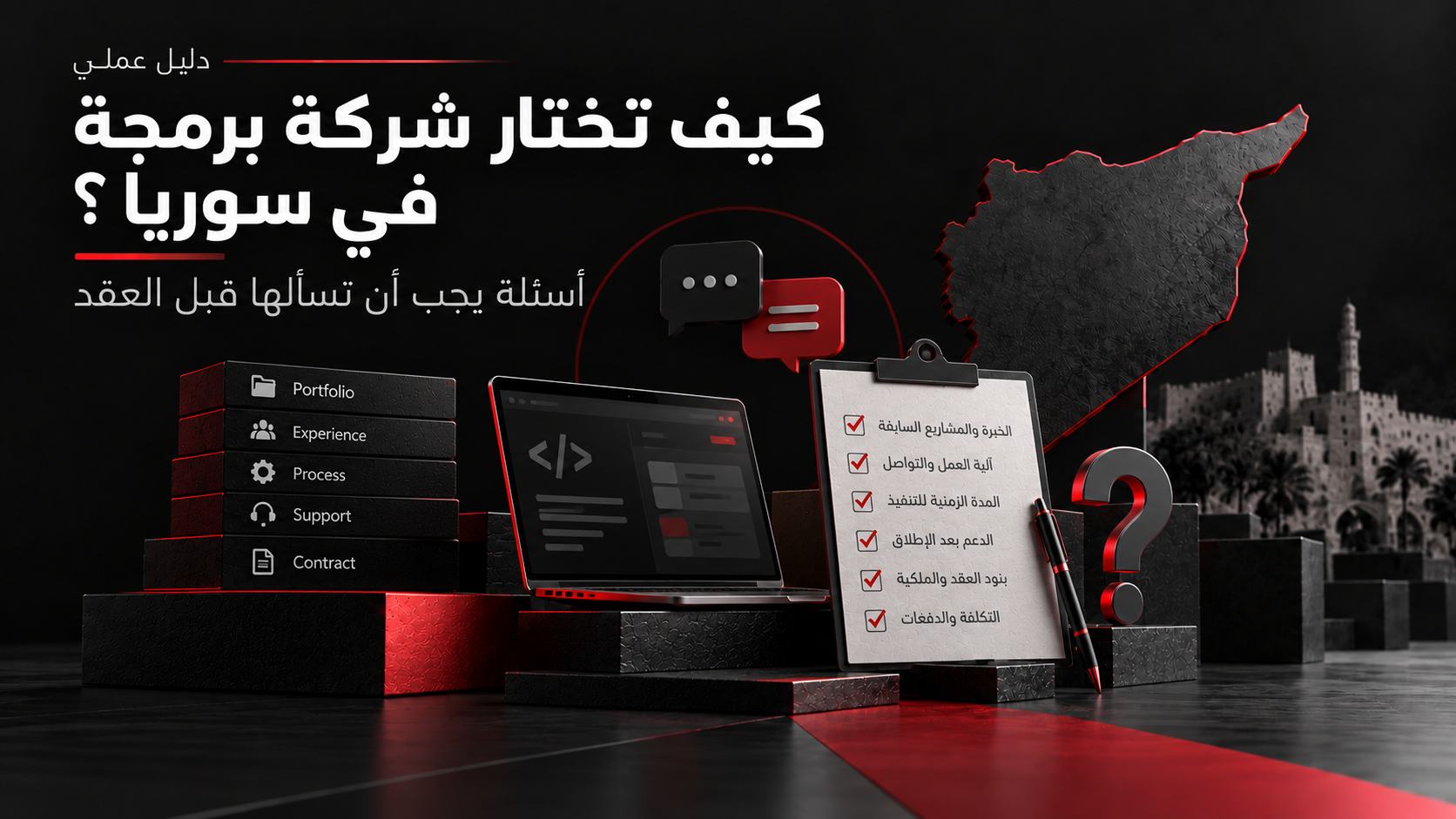
Choosing a software company should not start with “Who is cheapest?” or end with “Who has the nicest portfolio?” A software project is a relatively long relationship, and the real risks sit behind the demo: who owns the accounts, where the database lives, what happens if the relationship stops, how backups are handled, and whether the quote actually describes what you will receive. In a market where both providers and buyers have different levels of experience managing digital projects, a structured pre-contract checklist reduces room for disagreement later. The goal is not to find a “perfect” vendor, but a partner that can explain what it will build, what it will not build, and how the product remains operable over time.
1. Did They Understand the Problem or Jump Straight to the Solution?
A good company does not need weeks to understand an idea, but it also should not jump to technology before understanding users and operations. If the first question is “Flutter or React?” before the business process is understood, the discussion has started from tools rather than the problem.
Ask the team to explain your project back to you: who is the user, what is the critical journey, what data is involved, what systems already exist, and what is operationally difficult. A shallow answer usually leads to a shallow estimate.
- Did they ask about users and workflows?
- Did they identify unclear assumptions?
- Did they separate current needs from future ideas?
- Did they recommend removing features that are not needed yet?
2. Does the Quote Describe Scope or Just List Features?
Phrases such as “app + dashboard + API” are not enough. It should be clear who does what, what the main states and workflows are, which integrations are included, what is excluded, and what counts as an additional change.
The more ambiguous the proposal, the more likely one side will later say “we assumed it was included” while the other says “it was not part of the agreement.” Clear scope protects both sides.
- Deliverables for each phase.
- Platforms, languages, and user roles.
- Integrations and external services.
- Explicit exclusions.
- Process for approving out-of-scope changes.
3. Who Owns the Source Code, Accounts, and Assets?
Before development begins, define ownership of code, design files, domains, hosting, and platform accounts. Apple, Google, domain, cloud, and other critical accounts should not become dependent on one person without a clear reason and agreement.
You may not need every permission on day one, but the contract should state what you own at handover and what remains a managed service. Ask how handover works if you later change teams.
- Source repository and access rights.
- Hosting and domain accounts.
- Apple Developer and Google Play Console.
- Database and backups.
- Design files and visual assets.
- API documentation, secrets, and secure transfer process.
4. How Do They Test Quality and Security?
It is not enough that the app works on the developer's phone. Ask how key user journeys are tested, how errors are handled, whether staging exists before production, and how backup and restore are managed.
For products with sensitive data, payments, or multiple permissions, ask about access control, secret storage, and audit logs. You do not need complex security terminology; you need procedures the team can explain.
- Staging before production.
- Test checklist for critical journeys.
- Backup and restore procedure.
- Secret and service-key management.
- Error logging and monitoring after launch.
- Security and dependency updates.
5. What Happens After Delivery?
Some issues appear only after real users arrive. The contract should explain the warranty or bug-fix period and distinguish a defect from a new development request.
Also ask about long-term maintenance: who updates the app when Android or iOS changes, who tracks expiring certificates or keys, and who monitors hosting? You do not always need an ongoing maintenance contract, but responsibility should be clear.
- Post-launch bug-fix period.
- Support channels and response expectations.
- Operating-system and dependency update policy.
- Pricing for future enhancements.
- Exit and handover plan if the relationship ends.
6. Questions to Ask Before Signing
You do not need fifty scoring criteria. Focus on questions that reveal scope clarity, continuity, and the ability to operate the product after handover. A good answer is not always “yes”; sometimes it is a clear, justified limitation.
If you are comparing two proposals for the same project, The Drix can also help analyze the scope itself before comparing prices so you can see whether the difference comes from quality, workload, or simply two offers that do not include the same thing.
- 1What problem do you understand we are trying to solve?
- 2What exactly do we receive in each phase?
- 3What is excluded from this price?
- 4Who owns the code, accounts, domain, and hosting?
- 5How do you handle testing and backups?
- 6How are out-of-scope changes approved?
- 7What happens if the relationship stops?
- 8What post-launch support is available?
- 9Are there recurring third-party costs?
- 10How will documentation and knowledge be transferred at handover?
Limitations
This checklist reduces risk but cannot guarantee the success of any vendor or project. Ownership, responsibility, warranty, and legal terms should be documented in an agreement suitable for the project and jurisdiction.